
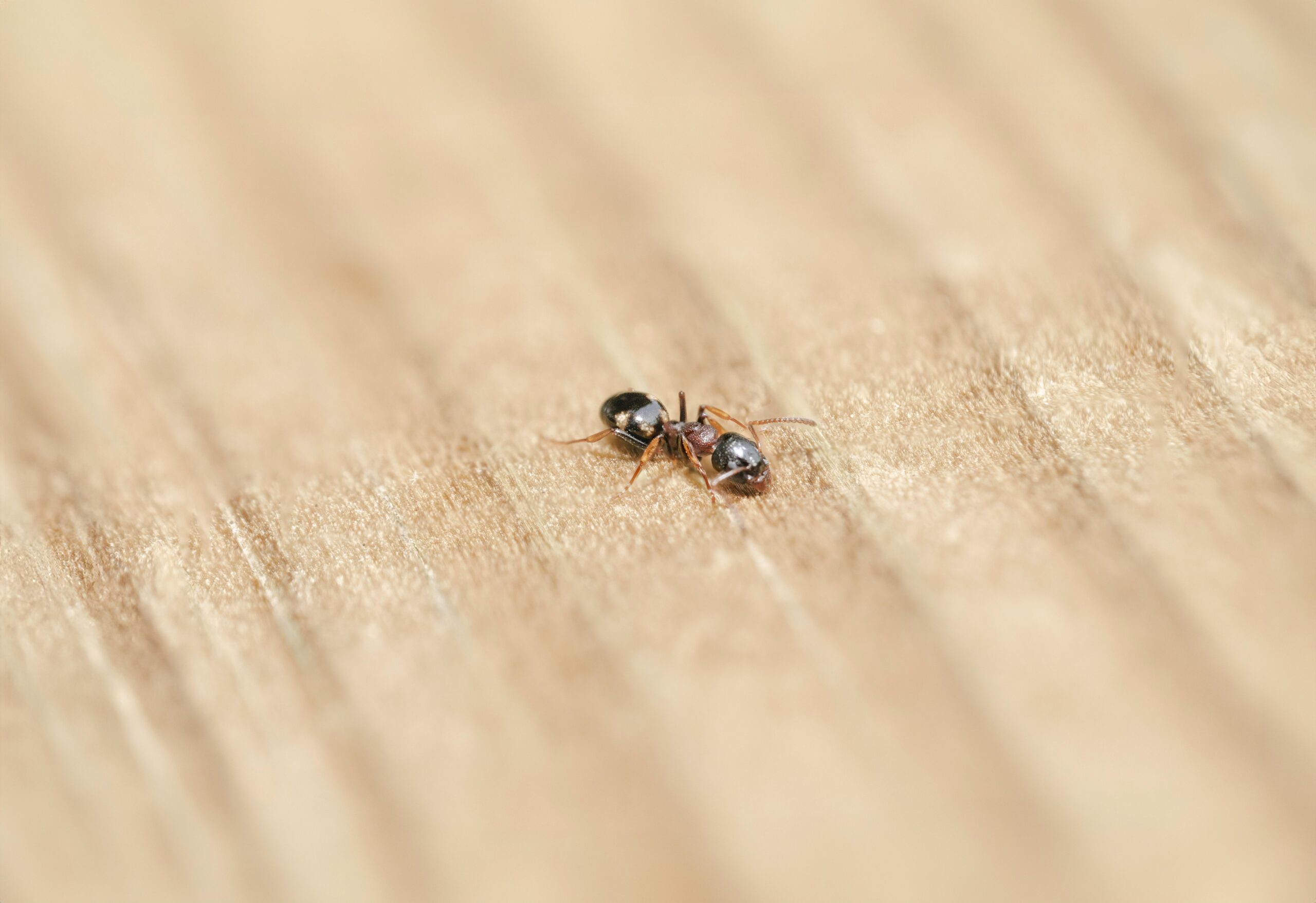
For the vast majority of homeowners, discovering an unexpected line of insects marching across a kitchen counter triggers an identical, reactive response. They track the active trail, grab a retail can of contact spray, and assume the problem has been solved. However, the surface trail inevitably returns within three days. A week later, two separate lines manifest along the baseboards, and within a month, a massive satellite nest is uncovered deep inside the wall voids. Managing these social insects requires a biology-based approach, making professional ant pest control an essential requirement to protect your structural framing and food supply.
The underlying reality of colony dynamics explains why topical remedies fail: the surface workers you see represent less than ten percent of the total population. The true threat remains completely hidden behind your drywall, where a mature parent nest can harbor hundreds of thousands of active workers and multiple reproductive queens. Successful containment is not about neutralizing visible insects on a counter, it is about deploying non-repellent transfer chemistry to systematically eliminate the deep nesting core. For homeowners seeking lasting protection, this requires a continuous, year-round maintenance program rather than a single, short-lived chemical application.
Key Takeaways: Advanced Colony Mitigation
- Continuous Year-Round Activity: Ants alter their foraging depths as temperatures shift. Mild winter thaws encourage colonies to nest inside heated crawl spaces, making containment a multi-season demand.
- The Retail Spray Backlash: Generic over-the-counter contact aerosols cause a defense reaction known as budding, forcing a single parent nest to fracture into multiple independent breeding cells.
- High-Risk Species Hazards: Wood-boring carpenter ants destroy structural timbers, invasive fire ants deliver venomous stings, and odorous house ants contaminate food prep surfaces with dangerous bacteria.
- DIY Bait Limitations: Consumer-grade baits often feature incorrect chemical ratios that kill workers too quickly, failing to reach the queen before the transfer chain breaks down.
- Academic-Backed Technical Standard: Triangle Pest Control deploys QualityPro certified field specialists whose continuous rigorous training is coordinated directly with entomology experts at NC State University.
1. Why Ants Present a Persistent Year-Round Structural Threat
A common misconception among property owners is that ant activity is strictly restricted to warm spring and summer months. In reality, shifting barometric lines and dropping temperatures simply cause colonies to relocate their nesting zones. Instead of dying off over the winter, local species retreat deep into structural foundations, crawl spaces, and heated wall cavities, sustaining low-level foraging runs behind your appliances all winter long.
The United States harbors approximately 700 distinct ant species, with highly adaptable variations tracking across regional climates. Structural pests like carpenter ants, fire ants, odorous house ants, pavement ants, and Argentine ants maintain overlapping breeding seasons that span all twelve months of the year. Relying on a single, isolated sticky bait leaves your home’s boundaries entirely exposed to traveling scouts during the remaining nine months of seasonal shifts.
2. Season-by-Season Biological Ant Activity Matrix
Successfully intercepting an introduction requires aligning your perimeter shields with the changing foraging demands of the nest across the calendar:
| Seasonal Window | Dominant Active Species | Primary Structural & Health Risks | Professional Technical Action |
|---|---|---|---|
| Spring Thaw | Carpenter ants, odorous house ants | Rapidly expanding indoor satellite nests; intensive pantry tracking. | Comprehensive foundational inspections + moisture zone mapping. |
| Summer Heat | Invasive fire ants, pavement ants, Argentine ants | Venomous yard stings; high-density supercolony tracking over pavement. | Two-step broadcast baiting + continuous liquid perimeter barriers. |
| Autumn Shift | Odorous house ants, acrobat ants | Insects seek heat sources; entry through expansion joints. | High-level mechanical exclusion + targeted non-repellent micro-dusting. |
| Winter Freeze | Carpenter ants, moisture-loving ants | Silent internal wood tunneling; ongoing contamination behind appliances. | Sub-floor insulation audits + structural utility void containment. |
Social insects do not monitor a wall calendar. Operating on a single spot-treatment methodology leaves your most valuable asset vulnerable to quiet colonization. Establishing a consistent, quarterly perimeter barrier is the only verified way to intercept changing populations before they nest inside your walls.
Concerned About Hidden Decay?
Skip the risky chemical guesswork of spray cans. Contact our QualityPro certified professionals by 3 PM to protect your home.
3. The Real Financial and Health Liabilities of Untreated Infestations
Because ants are small and do not present an immediate threat of structural collapse within 24 hours, homeowners routinely categorize them as a simple aesthetic nuisance. This assumption can be an expensive management mistake. Consider the documented damage profiles of unchecked infestations:
Silent Cellulose Degradation
Unlike termites, carpenter ants (Camponotus) do not ingest wood fibers as a nutrition source. Instead, they utilize powerful mandibles to mechanically hollow out seasoned structural timbers to expand their reproductive nesting galleries. They target moisture-compromised window casings, roof eaves, and main floor sill plates, chewing smooth tunnels through the load-bearing wood framing. A mature parent nest can compromise the structural stability of your home framing from the inside out, resulting in massive carpentry repair bills long before presenting a single visual warning sign on your drywall.
Public Health & Food Contamination Vectors
Foraging insects travel across highly unhygienic exterior pathways, tracking soil pathogens and biological waste straight onto your kitchen food-prep counters. Odorous house ants are active mechanical vectors for food-borne illnesses such as Salmonella, contaminating pantries and dry goods with volatile compound excretions. Furthermore, on outdoor residential turf, invasive red imported fire ants construct extensive underground networks, delivering aggressive, venomous stings that cause painful pustules. For sensitive family members or companion pets, these stings can trigger severe, high-risk systemic allergic reactions requiring immediate emergency medical care.
Landscape and Utility Infrastructure Damage
Invasive Argentine ants form massive, interconnected supercolonies containing millions of highly cooperative workers that can take over entire residential properties, outcompeting beneficial local wildlife. Meanwhile, pavement ants dig continuous networks immediately beneath concrete walkways, stone patios, and driveway expansion joints, displacing topsoil layers until the masonry sheets shift and crack under standard structural loads.
4. The Science of Transfer Baiting vs. Repellent DIY Sprays
The primary reason consumer-grade retail sprays fail is a biological mechanism centered around trail pheromones and colony defense. Retail canisters utilize highly repellent chemical formulas. When applied directly to an active line of trailing ants, they kill a few visible workers on contact but instantly alarm the rest of the nest. The surviving ants detect the chemical hazard and deploy an immediate colony defense mechanism known as budding: the parent colony fractures, and multiple queens rapidly scatter in separate directions with clusters of eggs to build independent satellite nests throughout your wall voids.
Furthermore, when a worker is neutralized by a topical retail spray, the microscopic trail pheromones they deposited from their abdominal glands remain fully intact on your wood framing. These invisible chemical paths instruct hidden workers to continue traveling to the exact same kitchen food source the moment the topical spray residue degrades. Professional ant pest control eliminates this liability by deploying specialized, non-repellent transfer chemistry. Foraging workers travel through these completely undetectable treatment zones, passing the slow-acting active ingredients throughout the deep nesting core via a natural food-sharing process known as trophallaxis, neutralizing the reproductive queen and collapsing the primary nest source.
5. What an Authoritative Technical Service Program Integrates
When you enlist the specialized pest professionals of Triangle Pest Control, your property is insulated by a highly methodical, multi-tiered protection system. A professional service visit integrates these critical operational phases:
- Definitive Species Auditing: Your QualityPro technician isolates the exact ant species occupying your lot, ensuring your custom treatment matches their specific nesting behaviors.
- Comprehensive Site Audits: Meticulously evaluating your entire home footprint, checking your foundation brick sills, checking crawl space columns, and analyzing internal pipe chases to map hidden moisture lines and nesting reservoirs.
- Precision Non-Repellent Baits: Deploying advanced, slow-acting transfer matrices along verified foraging pathways, leveraging natural trophallaxis habits to target the primary queen.
- Continuous Exterior Boundaries: Applying high-durability liquid barriers around your foundation masonry to block secondary seasonal migrations from breaching your living spaces.
- Two-Step Fire Ant Suppression: For properties managing active fire ant mounds, we apply broad-scale yard broadcast baits combined with direct mound infusions to provide complete turf safety.
- Certified Technical Tracking Reports: Generating detailed written service reports after each visit to preserve your home’s security.
Frequently Asked Questions (FAQs)
1. Why do foraging ants repeatedly return to my home after I spray the trails?
Store-bought retail aerosols function as highly repellent topical sprays, meaning they only eliminate the few surface workers hit directly while scattering the rest of the parent nest deeper into your wall voids via a defense response called budding. Because the primary reproductive queens and invisible trail pheromones remain completely untouched, the population recovers within weeks, returning heavier than before.
2. Are professional ant control applications safe for my children and pets?
Yes. Our QualityPro certified pest professionals deploy advanced, target-specific, GreenPro Certified treatments precisely inside and outside of the home that are safe for household pets and children. Your technician will outline any necessary, localized re-entry drying times before concluding their service.
3. What represents the primary difference between carpenter ants and fire ants?
Carpenter ants are a danger because they mechanically tunnel into wood framing to hollow out nesting galleries, causing extensive wood decay. Fire ants develop large earth mounds outdoors and attack violently when disturbed, presenting a direct health risk to families and domestic pets through venomous stings. Both require specialized, target-specific remediation protocols to clear.
4. How frequently should I arrange professional ant control services?
Scheduling service on a consistent quarterly matrix (four visits per year) represents the suggested industry standard to maintain continuous protection. Operating on a recurring quarterly schedule accommodates seasonal shifts in insect behavior, allows your specialist to refresh your home’s exterior chemical shields, and prevents migrating colonies from nesting inside your walls between visits.
Harden Your Property Boundaries Against Invasive Colonizers
Ants do not take a season off, and neither does our technical team. Every seasonal transition introduces a different target species with a unique biological strategy for breaching your exterior foundation sills, whether it is spring carpenter ants, summer fire ants, autumn odorous house ants, or winter moisture ants. Triangle Pest Control’s certified professionals combines university-backed training with advanced non-repellent transfer chemistry to handle your pest issues at the true biological source, delivering continuous protection. If you are managing a recurrent introduction or want to secure your boundaries before seasonal migrations accelerate, our specialists are fully equipped to assist. Contact our local office by 3 PM to secure same-day service, and take your home back today!