
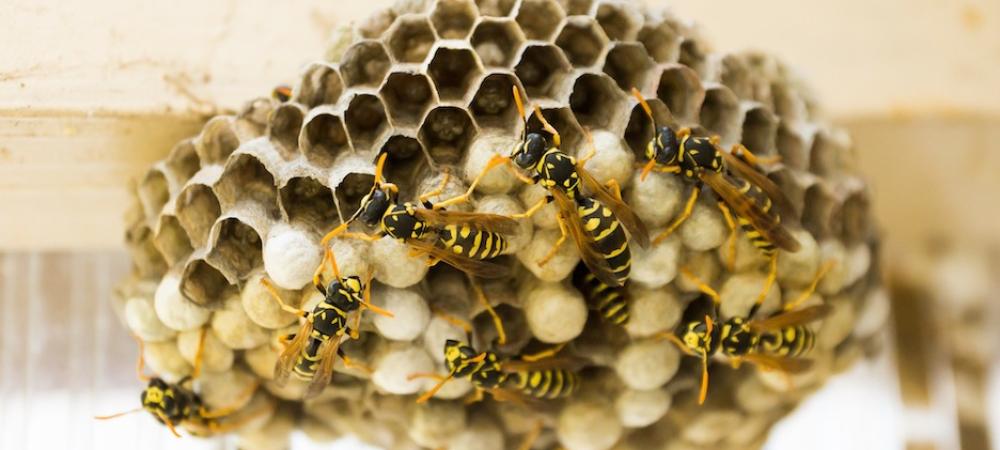
As a homeowner in North Carolina, managing outdoor areas safely means paying close attention to flying stinging insects. Wasps are a highly prevalent seasonal reality across the state. While these predatory insects offer minor ecological benefits by feeding on common garden caterpillars and assisting with baseline pollination, their defensive nesting behaviors pose immediate safety liabilities—particularly for the thousands of local residents managing severe systemic allergies to insect venom. Developing an accurate baseline for identifying local species, executing structural exclusion steps, and recognizing when a colony demands professional intervention are essential protocols to maintain long-term protection over your lawn, porch, and family spaces.
Anatomical Profiling: Differentiating Wasps from Bees
Foraging wasps are frequently misidentified by property owners as common honey bees or native carpenter bees due to their overlapping black-and-yellow color matrices. However, wasps possess distinct evolutionary and morphological traits that dramatically alter how they interact with your property investment:
- Body Segmentation and Texture: Wasps display a distinctively slender, smooth, and elongated body profile featuring a highly pronounced, narrow “pinched” waist (petiole). Unlike bees, their exoskeletons are completely devoid of dense, pollen-carrying hairs, giving them a sleek, glossy appearance.
- Color Morphology: While bees favor warm, muted amber tones, native North Carolina wasps exhibit intense, highly contrasting warning patterns. Most local species present alternating bands of midnight-black and brilliant neon-yellow, or deep shades of mahogany-red and rust.
- Stinging and Foraging Mechanics: Honey bees carry a barbed stinger that tears away from their abdomen after a single defensive use, resulting in the bee’s death. Conversely, wasps possess a smooth, lancet-like stinger that allows them to deliver multiple venom injections in rapid succession without damaging their anatomy. Furthermore, they are highly territorial and exhibit heightened aggression when their nesting boundaries are crossed.
If you notice these flying vectors hovering continuously along your siding, it is highly likely that a mature colony has established a hidden nesting footprint nearby. To understand the separate habits of wood-boring bees, read our definitive diagnostic guide comparing bumble bees vs. carpenter bees.
Why Stinging Pests Flit to Central North Carolina
Our region’s prolonged, humid summer climate creates an exceptional environmental incubator for stinging insect colonies to expand. Lush landscaping, dense hardwood canopies across Raleigh’s park systems, and the tight, tree-lined residential developments typical of Charlotte deliver premium shelter and abundant prey for foraging wasps. Additionally, the looser, sandy-loam soils shifting across the Sandhills and the foothills of the Blue Ridge Mountains provide premium nesting terrain for underground burrowing species, requiring residents across these zones to maintain persistent perimeter vigilance.
Primary Species of Wasps in North Carolina
Successfully managing your property’s baseline risk requires identifying the exact species setting up harborages along your eaves. Different variants carry drastically diverse nesting patterns and defensive thresholds:
- Yellow Jackets (Vespula species): These are the most notoriously aggressive wasps active throughout North Carolina. They construct paper-comb nests tucked inside deep underground rodent burrows, hollow logs, or structural wall voids. Because their nest entries are completely hidden from plain view at the surface, property owners frequently trigger mass defensive swarms accidentally while executing routine yard maintenance or running lawnmowers over turf grass.
- Paper Wasps (Polistes species): Immediately recognizable by their elongated, dangling legs during flight, paper wasps construct open, uncovered grey combs that resemble an inverted umbrella. They manufacture their nesting pulp by chewing up weathered structural deck timbers and mixing it with their saliva. They attach these structures directly to exposed, protected architecture, including window headers, porch ceilings, and roof eaves.
- Eastern Cicada Killers (Sphecius speciosus): Measuring up to two inches in length, these solitary, heavy-bodied giants carry intimidating black-and-yellow striped coloration that alarms homeowners. However, they are highly docile and lack nest-defense instincts. Active primarily during mid-summer thaws, females burrow individual nursery tunnels into dry topsoil or sunny garden beds, hunting native cicadas to feed their developing larvae.
- Bald-Faced Hornets (Dolichovespula maculata): Belonging biologically to the yellow jacket family, these large, midnight-black insects feature distinct white markings across their faces. They are master builders, constructing massive, fully enclosed, teardrop-shaped gray paper nests that hang from high tree canopies or property gables. They maintain a low tolerance for vibration, attacking aggressively if their nesting tree is disturbed.
Integrated Preventative Hardening Strategies
The most reliable method for preventing wasps from claiming territory on your property is making the structural environment as inhospitable to foraging queens as possible. Implement these essential home hardening practices:
- Execute Precise High-Level Structural Exclusion: Carefully audit your home’s exterior fascia lines, soffit vents, and window trim. Seal any unmanaged construction gaps, brick cracks, or structural openings using premium silicone caulk or stainless steel wool cloth to stop queens from crawling inside wall voids to nest.
- Deny High-Protein and Sugar Attractants: Wasps possess highly advanced olfactory sensory organs. Ensure all outdoor residential trash bins are equipped with rubber-gasket, locking lids. Clean up patio dining remnants and spillages immediately, and remove dropped fruit from backyard trees to eliminate easy foraging targets.
- Eliminate Overgrown Landscape Harbors: Meticulously prune back dense foundation shrubs, thin out unmanaged thickets, and elevate backyard firewood piles completely off the soil, keeping wood stored well away from your primary structure to minimize low-traffic hiding spaces.
- Deploy Strategic Decoy Barriers: Because social wasps are highly territorial and fiercely defend established zones, hanging low-profile commercial decoy nests around your primary patio spaces can successfully discourage traveling queens from establishing satellite colonies along that specific roof eave.
Wasp Management Safety: The Inefficacy of DIY Sprays
When dealing with an established nest, attempting to self-treat the structure using retail over-the-counter freeze sprays carries significant physical risks. While consumer aerosol products are engineered to throw a stream up to twenty feet, they frequently trigger intense panic responses across the colony before the active ingredients can thoroughly saturate the internal combs. This sudden alarm drives angry defensive workers to surge outward to protect the nest, exposing the applicator to painful, multiple stings.
Furthermore, attempting to spray liquid chemical pesticides directly into indoor ventilation paths or structural weep holes is a dangerous, ineffective strategy. This approach can force the insects to migrate deeper inside your living spaces, while introducing volatile chemical vapors directly into your home’s air handler, creating unnecessary breathing hazards for your family and pets.
Secure Certified Professional Protection with Triangle Pest Control
If you encounter an active underground yellow jacket network or a large bald-faced hornet nest hanging near your doorway, safety demands transitioning away from short-lived retail treatments and securing a professional solution. Confronting defensive colonies without industrial protective gear and specialized chemical classes introduces severe, preventable medical exposure risks.
At Triangle Pest Control, our QualityPro certified field experts deploy advanced integrated pest management protocols designed to achieve reliable, long-term population suppression. We perform intensive property evaluations to locate active nesting trails, utilize non-repellent micro-encapsulated treatments to neutralize colonies safely at the source, and establish continuous exterior perimeter defenses to discourage future queens from building on your lot. Reclaim full, comfortable control over your yard investment—contact our local expert team today to schedule your comprehensive structural audit!