

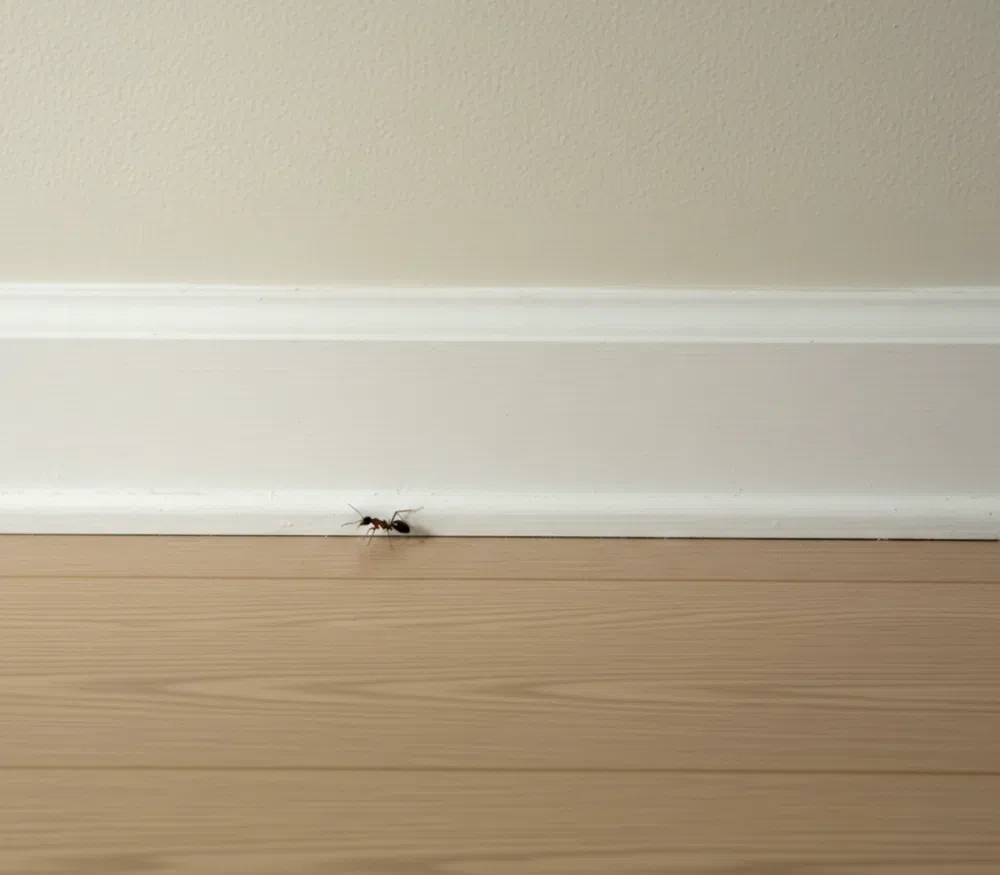
Ants before spring often catch homeowners off guard. In Charlotte, fluctuating winter temperatures push ant colonies to move earlier than expected, especially during warm spells that provide moisture and easy access to food indoors.
In Charlotte, mild winters and early warm spells create ideal conditions for ant activity weeks before spring officially begins.
Why Ants Become Active Before Spring
Ants do not follow the calendar. They respond to temperature and survival conditions.
According to NC State Extension, many house-invading ants become active during brief warm periods in winter as colonies search for food and moisture.
When daytime temperatures rise above 50°F, ant colonies near foundations, crawl spaces, and mulch beds begin searching for food.
Winter Conditions vs. Ant Activity
| Winter Condition in Charlotte | What Happens | Why Ants Move Indoors |
| Daytime temps above 50°F | Colonies begin foraging | Ants become active during warm spells |
| Warm days, cold nights | Outdoor nests destabilize | Homes offer steady temperatures |
| Increased winter rainfall | Soil and mulch stay damp | Moisture attracts ants |
| Reduced outdoor food | Less natural food available | Ants search kitchens and pantries |
| Foundation or crawl space gaps | Easy access points | Ants enter unnoticed |
Key triggers for early ant activity include:
- Warm afternoons followed by cool nights
- Increased moisture from winter rain
- Reduced outdoor food availability
Why Ants Target Homes in Late Winter
Homes provide what ants need when outdoor conditions become unstable.
Even clean homes attract ants because they offer:
- Consistent warmth
- Water from kitchens, bathrooms, and utility rooms
- Easy entry through small foundation gaps
In Charlotte neighborhoods like Ballantyne, SouthPark, Dilworth, and Steele Creek, slab foundations and crawl spaces are especially vulnerable during late winter.
Common Ants Seen Before Spring in Charlotte
Several ant species stay active year-round in the Charlotte area.
Odorous House Ants
These ants are small and dark and often form long trails along baseboards and countertops. They are one of the most common winter ant invaders.
Pavement Ants
Pavement ants nest under concrete slabs and driveways. Temperature shifts force them indoors early in the season.
Carpenter Ants
According to NC State Extension, carpenter ants nest in damp or damaged wood and often become active indoors during late winter when moisture and temperature conditions change.
Carpenter ants do not eat wood, but they nest in it. Late-winter activity often signals moisture problems inside walls or crawl spaces.
Why Early Ant Activity Is Easy to Miss
Early ant infestations rarely start with large swarms.
Most homeowners first notice:
- A few ants near sinks or pet bowls
- Activity on warmer afternoons only
- Ants disappearing overnight
This makes early infestations easy to ignore. Unfortunately, colonies continue growing behind the scenes.
Does Early Ant Activity Mean a Bigger Spring Problem?
When ants appear before spring, it usually means the colony is already active and searching for stable indoor conditions.
Early ant sightings often indicate a well-established colony close to the home.
By the time spring arrives:
- Foraging trails become heavier
- Multiple entry points may develop
- DIY treatments stop working
Addressing ants before spring limits colony expansion and reduces recurring problems throughout the year.
How to Reduce Ant Activity Before Spring
Homeowners can take a few preventive steps in late winter.
Early prevention checklist:
- Seal cracks around doors, windows, and foundations
- Remove moisture near the home’s exterior
- Store food in sealed containers
- Address recurring ant trails promptly
DIY methods may reduce activity temporarily but rarely eliminate the colony.
When to Schedule Professional Ant Control in Charlotte
Late winter is one of the best times to address ant problems.
Professional treatments focus on:
- Identifying nesting sites
- Treating colonies at the source
- Preventing future entry points
This approach is far more effective before spring population growth begins.
FAQs
- Are ants active in winter in Charlotte? Yes. Ants remain active during mild winter periods, especially when temperatures rise above 50°F.
- Why do ants come inside before spring? Ants seek warmth, moisture, and food when outdoor conditions fluctuate in late winter.
- Is early ant activity a sign of infestation? Often yes. Early sightings usually mean a nearby colony is already established.
Ants do not wait for spring and neither should you. Protect your home year-round with a SafeHome plan and enjoy peace of mind before the season shifts.