
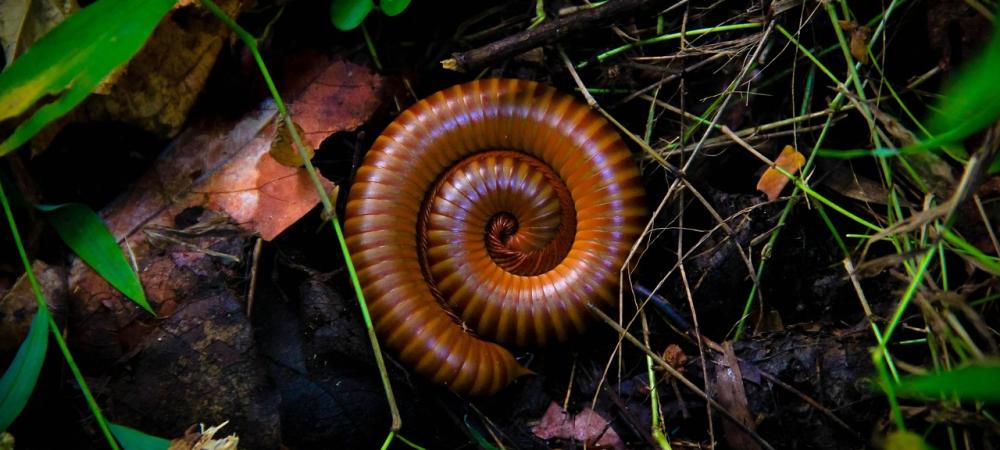
As a homeowner in North Carolina, you have likely encountered centipedes or millipedes inside your home at one point or another. While these multi-legged crawlers are not structurally destructive, discovering them inside can still be deeply frustrating. Given our humid regional climate and dense natural landscapes, centipedes and millipedes are incredibly common residential invaders, especially during shifting seasonal weather. Understanding how to accurately identify, control, and prevent these pests is essential to keeping your home secure and comfortable.
In this guide, we’ll break down the biological differences between centipedes and millipedes, explore the specific moisture cues that drive them indoors, and detail the most effective ways to secure your perimeter.
Centipedes: Fast, Predatory, and Agile
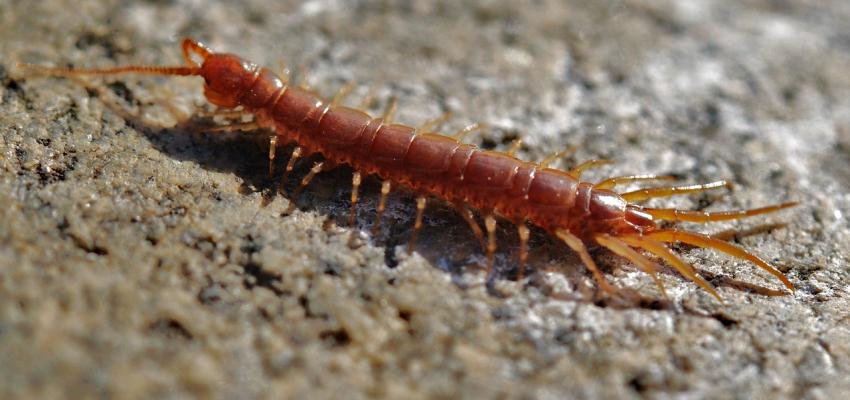
Centipedes are aggressive, highly active nocturnal predators. The most prevalent species encountered inside local properties is the House Centipede (Scutigera coleoptrata). They feature a distinct, flattened yellowish-brown body reaching up to 1.5 inches in length, accented by three dark longitudinal stripes. They possess exactly one pair of long, delicate legs per body segment, giving them a distinctively feathery, unsettling appearance as they move.
House centipedes are lightning-fast, utilizing their elongated legs to sprint across walls, basements, and floorboards in pursuit of prey. They are completely carnivorous, feeding continuously on a long list of problematic household pests including spiders, ants, silverfish, termites, and small cockroaches. To capture prey, they utilize specialized, venom-bearing front legs known as forciple claws. While these pincers are highly effective at neutralizing small insects, house centipedes are entirely non-aggressive toward humans and their mouthparts are rarely strong enough to penetrate human skin. In the rare event of a defensive pinch, it typically results in nothing more than minor, localized skin irritation.
Millipedes: Slow-Moving, Harmless Decomposers
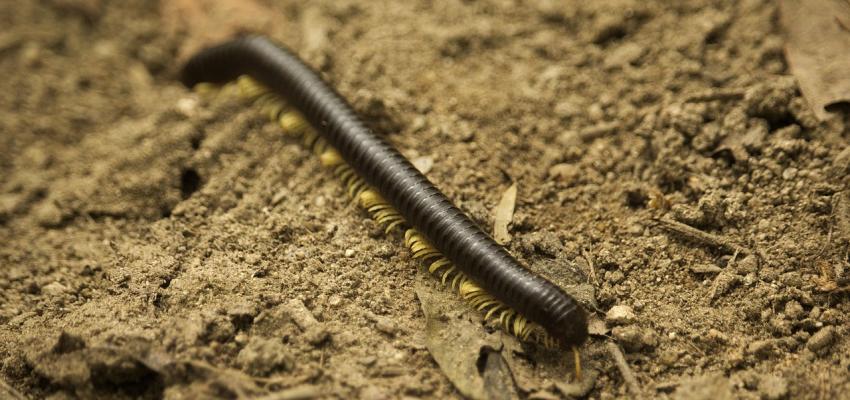
Millipedes display entirely different physical traits and behavioral habits. They possess rigid, sub-cylindrical bodies ranging in color from deep brown to jet black. Unlike centipedes, millipedes feature two distinct pairs of short legs on nearly every body segment. They move in a slow, rhythmic, wave-like motion and immediately tightly coil their bodies into a defensive spiral when disturbed.
In North Carolina, certain woodland millipede species can reach up to 4 inches in length. They are strictly non-predatory decomposers whose primary ecological function is to break down damp, decaying organic plant material, fallen leaves, and mulch. Millipedes lack any form of pincers or venom and are completely incapable of biting or stinging humans. However, when physically threatened or crushed, their defensive glands secrete a pungent, yellowish fluid that can leave a temporary, harmless stain on bare skin or emit a foul odor.
Why They Enter Homes: Seeking Moisture, Shelter, and Food
The primary driver behind indoor centipede and millipede invasions comes down to three basic necessities: moisture control, shelter, and foraging opportunities. Our warm, damp climate creates an ideal outdoor habitat for both organisms, but sudden environmental changes will quickly force them across your foundation line.
Centipedes: These predators follow the food. If your home has a quiet, underlying presence of smaller foraging insects like ants or silverfish, centipedes will systematically migrate indoors to hunt. Sump pump basins, unvented crawl spaces, and damp bathrooms are prime target zones because they naturally mirror the dark, high-humidity subterranean voids where their prey thrives.
Millipedes: These decomposers enter homes purely in search of moisture stability. During periods of heavy, persistent summer rainfall, the soil and mulch layers surrounding your home become completely saturated, forcing thousands of millipedes to migrate upward to escape drowning. Conversely, during extreme drought, they will slip through basement vents and door sweeps in a desperate bid to find cool, damp air to prevent dehydration.
Separating Fact from Fiction: Common Pest Myths
Addressing widespread misconceptions helps de-escalate the anxiety homeowners often feel when spotting these multi-legged invaders.
Myth: House centipedes are dangerous structural hazards.
Fact: Centipedes pose absolutely zero danger to your family or your property. They do not consume wood, chew wiring, or contaminate stored food. They are simple, accidental invaders that provide natural pest suppression by hunting down actual destructive insects.
Myth: Mass millipede migrations will destroy home foundations.
Fact: While discovering hundreds of millipedes in a basement can be alarming, they are entirely incapable of causing structural harm. They cannot chew through materials, and because our indoor air is far too dry for their survival, they typically dehydrate and die within 24 to 48 hours of crossing a baseline threshold.
How to Prevent and Eliminate Root Infestations
Achieving long-term control over centipedes and millipedes requires addressing the foundational conditions that allow them to thrive. Implement these precise, heavy-hitting preventative habits:
1. Reduce Moisture Levels and Remediate Humidity
Both organisms depend entirely on high relative humidity to survive. Eliminating damp microclimates around your property is the most effective deterrent available.
- Deploy Dedicated Dehumidification: Maintain relative humidity levels below 50% inside sub-floors and crawl spaces using commercial-grade dehumidifiers to aggressively dry out the air.
- Repair Structural Moisture Leaks: Routinely audit plumbing lines, window seals, and foundation walls for active leaks. Even micro-leaks create the critical damp pooling zones these pests track.
- Optimize Foundation Ventilation: Ensure crawl space vents are clear of obstructions, or consider complete crawl space encapsulation to isolate your sub-flooring from damp exterior soils.
2. Seal Foundation Entry Points and Gaps
Centipedes and millipedes exploit tiny gaps along your home’s exterior to gain access inside. Forging a physical barrier keeps them locked out.
- Seal hairline settlement cracks in concrete foundations and brick mortar using premium elastomeric sealants.
- Install heavy-duty, commercial-grade weatherstripping and adjustable door sweeps on all ground-level entry doors.
- Apply tight mesh screens or durable caulk shields around exterior pipe penetrations, utility drops, and dryer vents.
3. Manage Exterior Landscaping and Debris
The landscaping choices right against your foundation dictate local pest pressure. Removing ideal outdoor breeding environments stops migrations before they start.
- Establish an Exterior Buffer Zone: Rake back thick wood mulch, decaying leaf litter, and organic debris at least 12 to 18 inches away from your foundation wall, replacing it with bare soil or gravel.
- Elevate Storage Materials: Store firewood logs, brick piles, and compost bins at least 20 feet away from the home, elevating lumber off the damp ground.
- Manage Vegetation Canopies: Trim back overhanging tree branches, low-lying shrubs, and dense ground cover to allow direct sunlight to hit the soil line, naturally drying out potential pest shelters.
When to Secure Professional Advanced Protection
While basic landscaping adjustments can lower exterior pest counts, massive or recurring indoor centipede and millipede sightings generally point to a deeper issue—such as an unmanaged crawl space moisture problem or a significant secondary infestation of the smaller insects that centipedes hunt. If over-the-counter methods are falling short, bringing in a dedicated expert team is the most effective choice.
At Triangle Pest Control, our licensed professionals implement highly targeted, heavy-hitting exterior perimeter barriers and micro-encapsulated treatments designed to intercept crawling pests before they ever approach your foundation line. We focus on diagnosing the biological root causes of your infestation, providing permanent, family-safe protection all year long. Contact us today to schedule your comprehensive, no-cost property audit!