
As North Carolina homeowners, we take immense pride in the health and vitality of our local landscapes—stretching from the lush, elevated hardwood canopies of the Blue Ridge Mountains down to the rich, expansive agricultural fields of the Piedmont. However, the biological balance of our state’s native ecosystems faces a serious threat from an invasive plant-sucking pest: the spotted lanternfly (Lycorma delicatula). This comprehensive homeowner guide delivers essential information regarding this invasive threat, charts its expanding impact on our local timber and agricultural grids, and outlines the practical landscape management steps required to secure your property perimeter.
What is the Spotted Lanternfly?
Originally native to parts of Asia, the spotted lanternfly (SLF) was first intercepted within the United States in Berks County, Pennsylvania, in 2014. Utilizing advanced hitchhiking behaviors to deposit egg masses on commercial freight lines, vehicles, and outdoor equipment, this destructive planthopper has expanded its territory rapidly across the East Coast. State entomologists first confirmed an established breeding population within North Carolina in 2022. Because they lack effective natural biological predators in the United States, their colonies expand at an exponential pace, making localized vigilance an absolute necessity for real estate protection.
How to Identify Shifting SLF Life Stages
Spotted lanternflies display entirely distinct physical transformations as they cycle through their generations each year. Homeowners must learn to recognize all three primary developmental phases:
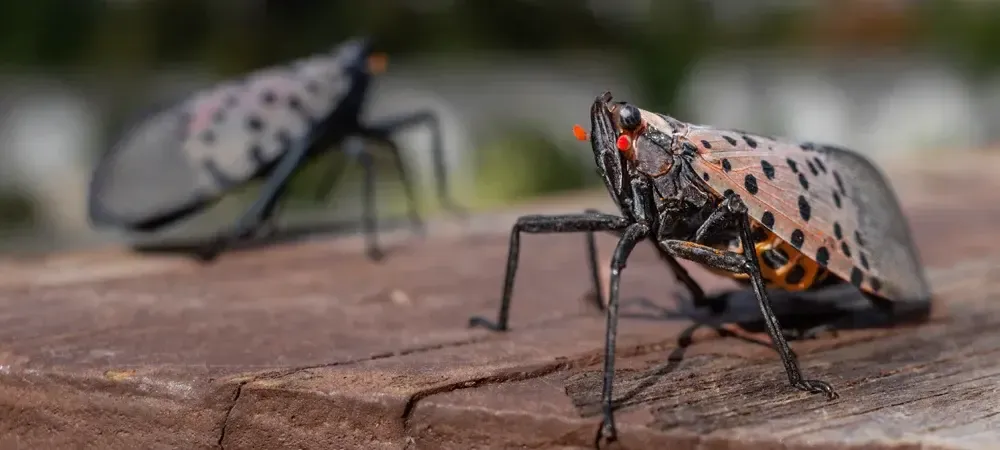
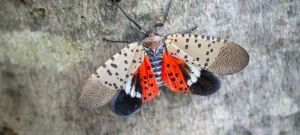
- The Winged Adult Phase: Fully mature adults measure approximately 1 inch in length and 0.5 inches in width. When at rest, they hold their large forewings tent-like over their bodies; these wings present a light pinkish-gray hue accented by prominent black spots and fine, brick-like patterned tips. If the insect takes flight or is startled, it exposes bright, crimson-red hindwings decorated with contrasting white bands and midnight-black panels. Their exposed abdominal segmentation is bright yellow sliced with black horizontal bars.
- The Developing Nymph Stages: Upon hatching during the spring thaws, early-stage immature nymphs are small, wingless, and completely black with brilliant white spots. As they feed and progress into their final instar phase by mid-summer, they undergo a dramatic color shift, turning a bright neon-red with distinct black markings and white speckling.
- The Overwintering Egg Masses: From late autumn through early spring, females deposit egg clutches containing 30 to 50 eggs across smooth vertical planes, including tree trunks, stone retaining walls, and outdoor furniture. They mask these clusters beneath a glossy, gray, putty-like secretion that quickly dries down into a cracked, dull texture that mimics a smudge of common mud or light lichen.
The Hidden Environmental Risks of an Active Introduction
While spotted lanternflies completely lack biting or stinging mouthparts and pose zero direct medical threats to humans or domestic pets, they introduce severe environmental and economic liabilities to a property:
- Severe Vascular Plant Atrophy: SLFs utilize sharp, piercing-sucking mouthparts to pierce outer bark and drain high volumes of nutrient-rich sap directly from vascular plant tissues. They show a profound biological preference for the invasive Tree of Heaven (Ailanthus altissima), but aggressively target high-value landscape maples, willows, ornamental rose bushes, and commercial fruit orchards.
- The Sticky Honeydew and Sooty Mold Cascade: Because their digestive tracts process massive amounts of sugary plant sap, feeding swarms continuously excrete a sticky, clear fluid known as honeydew. This substance rapidly coats surrounding lawns, decks, and walkways, generating a highly offensive sour odor that draws in secondary stinging insects. Even worse, the honeydew serves as a primary substrate for the growth of black sooty mold, which blankets foliage, blocks vital photosynthesis, and can kill prized landscape plants.
- Devastating Agricultural Impacts: In North Carolina, where forestry, agro-tourism, and viticulture serve as vital economic drivers, the lanternfly represents a multi-million-dollar threat vector. Massive swarms can cause up to a 90% yield reduction across infested vineyards, severely damaging local grape crops and disrupting agricultural operations statewide.
Tracking the Infiltration: North Carolina Counties on Alert
According to official regulatory updates published by the North Carolina Department of Agriculture and Consumer Services (NCDA&CS) Plant Industry Division, established breeding populations of the spotted lanternfly have officially expanded across seven North Carolina counties. Following its initial 2022 detection within the Triad region (Forsyth and Guilford), targeted tracking has confirmed established colonies moving along major transportation corridors into Rockingham and Caldwell counties, alongside recent confirmations throughout Davidson, Rowan, and Caswell counties.
Because these insects frequently crawl into open truck beds or lay camouflaged eggs on trailer frames, they spread easily via unsuspecting travelers. State operators prioritize treatments from April through October across high-traffic shipping hubs and development sites, but residential reporting remains our primary line of early detection defense.
A Comprehensive Property Management and Control Blueprint
Achieving effective, long-term population suppression across your landscape requires transitioning away from casual cleanup routines and deploying a structured, integrated protection system:
1. Execute Physical Elimination and Scraping
For isolated surface encounters, immediate mechanical removal is highly recommended—individual nymphs and adults should be stepped on or swatted immediately. For high-volume nymph clusters clustering along low branches, utilize a heavy-duty wet/dry vacuum charged with soapy water to safely capture and drown the insects. During winter dormancy, check your masonry and trees carefully to scrape egg masses directly into a container packed with rubbing alcohol to neutralize the embryos before they can hatch.
2. Deploy Non-Target Safe Circle Traps
Avoid utilizing raw, outward-facing sticky bands directly around tree trunks, as these unshielded adhesives frequently capture non-target local wildlife, including songbirds, native lizards, and beneficial pollinators. Instead, implement engineered “circle traps.” These specialized mesh cones funnel climbing nymphs upward into a secure collection bag as they execute their natural daily migration up and down the tree trunk.
3. Eradicate Primary Landscape Host Vectors
Systematically trace your property line for the invasive Tree of Heaven (Ailanthus altissima) and clear it from your lot. Because this rapidly growing weed tree provides the specific reproductive triggers that SLF colonies favor, eliminating them significantly lowers your property’s baseline attractiveness to migrating swarms, helping protect your prized backyard maples and peach trees.
4. Utilize Targeted, Professional-Grade Treatments
When localized pressures demand direct treatment, homeowners should avoid applying generic, non-selective chemical sprays that kill off beneficial backyard pollinators. Certified professionals utilize target-specific systemic bark injections or precision micro-encapsulated treatments containing active compounds like dinotefuran or bifenthrin. These methods safely isolate the active ingredients directly inside the tree’s vascular system, ensuring feeding lanternflies are neutralized without disrupting native garden biology.
How to Formally Report an SLF Encounter to State Authorities
If you encounter an active spotted lanternfly or locate a suspected mud-like egg mass anywhere inside North Carolina, documenting the event immediately is a vital civic step to protect our state’s agricultural stability:
- The Digital Portal: Capture clear, well-lit close-up photographs of the insect or mass, and submit them directly to the state’s tracking hub at NCDA&CS Spotted Lanternfly Reporting Tool.
- Direct Communications Division: You can contact the NCDA&CS Plant Industry Division via their toll-free hotline at 1-800-206-9333, or forward your GPS coordinates and image files directly to plant.protection@ncagr.gov.
- Localized Entomological Verification: Reach out to your county’s dedicated Cooperative Extension Center to secure specialized neighborhood management advice and confirm current pest boundaries.
Secure Your Property Line With Certified Local Experts
Managing an aggressive, fast-spreading invasive species demands an advanced understanding of insect biology, landscape vulnerabilities, and accurate seasonal timing patterns. Relying on short-lived do-it-yourself patches will fail to protect your high-value landscape trees from the devastating long-term impacts of sooty mold and vascular sap loss.
At Triangle Pest Control, our QualityPro certified field specialists work hand-in-hand with leading regional entomological benchmarks to deliver sophisticated integrated pest management strategies. We isolate local landscape risks, deploy advanced systemic protection shields, and help you maintain an ironclad perimeter defense line to preserve your property equity. Protect your landscape investment from becoming an invasive pest headquarters—contact our local expert team today to secure your comprehensive home audit!