
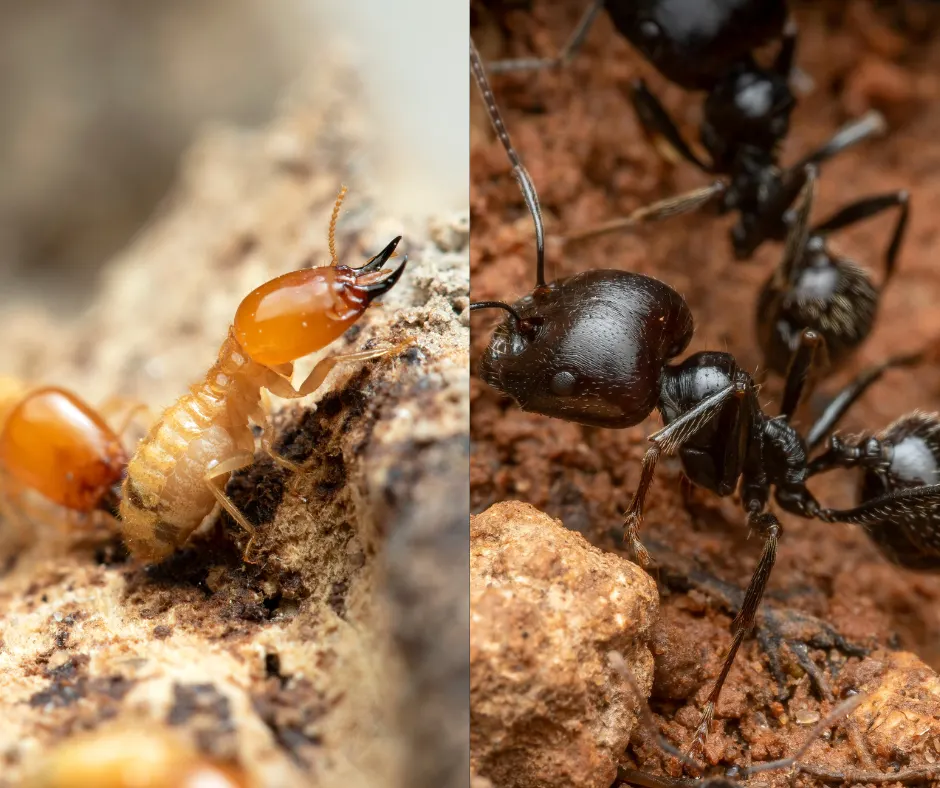
Subterranean termites aggressively consume wood cellulose to feed their subterranean colonies, while wood-boring carpenter ants systematically excavate and hollow out framing lumber solely to establish protective nesting galleries without digesting it. Accurately telling these two timber-destroying pests apart early prevents devastating structural property losses and ensures that target-specific professional treatments are applied. Knowing precisely which species is active inside your perimeter determines how fast structural damage spreads and how the population must be suppressed.
What Is the True Difference Between Termites and Carpenter Ants?
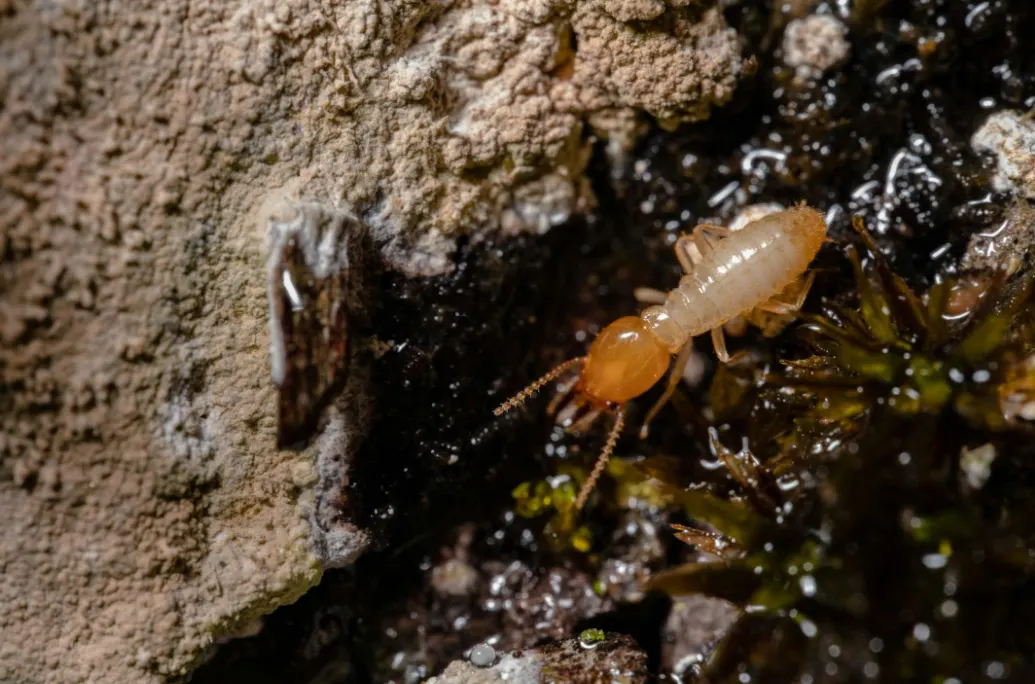
Termites are soft-bodied, pale cream to translucent white insects that live entirely hidden underground or inside sealed mud shelter tubes. Because they are highly vulnerable to drying out, they are rarely seen in the open outside of seasonal spring swarm events.
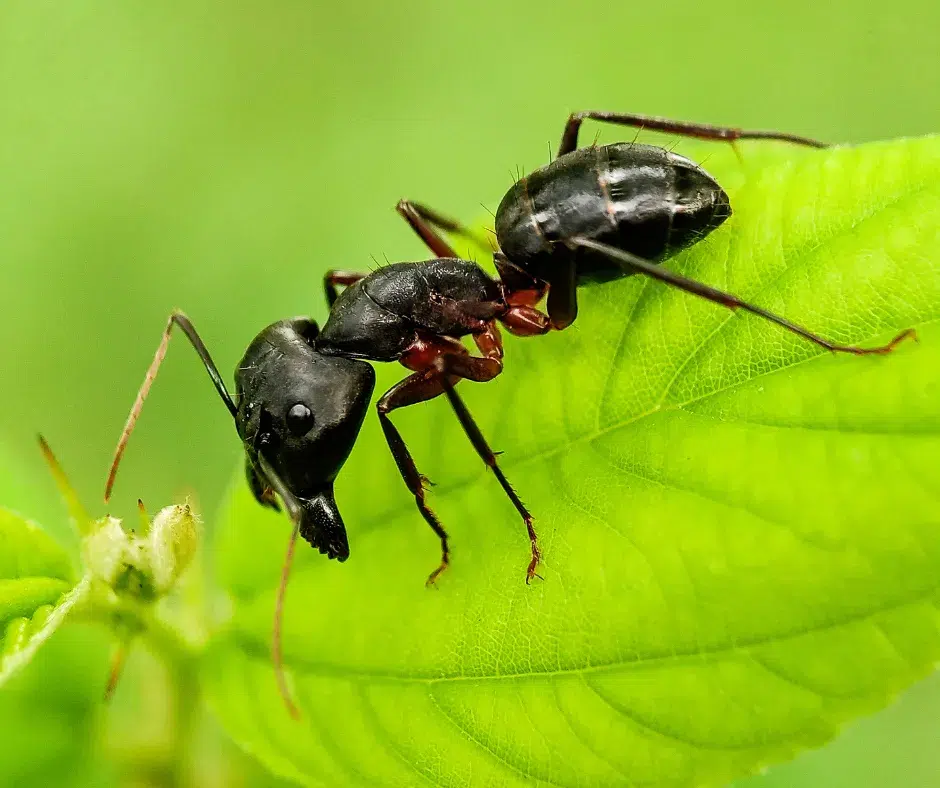
Conversely, carpenter ants are significantly larger, possess hard-shelled exoskeleton segments, and display a uniform black, dark red, or multi-toned coloration. They are frequently observed by property owners actively marching across interior baseboards, kitchen countertops, and porches while foraging for external food sources.
Subterranean termites create severe structural compromise by consuming the internal support timbers of a house from the inside out. Carpenter ants weaken wood framing by carving out expansive living chambers, typically targeting structural zones currently or historically impacted by hidden plumbing leaks, window condensation, or poor drainage.
Which Induces More Severe Damage: Termites or Carpenter Ants?
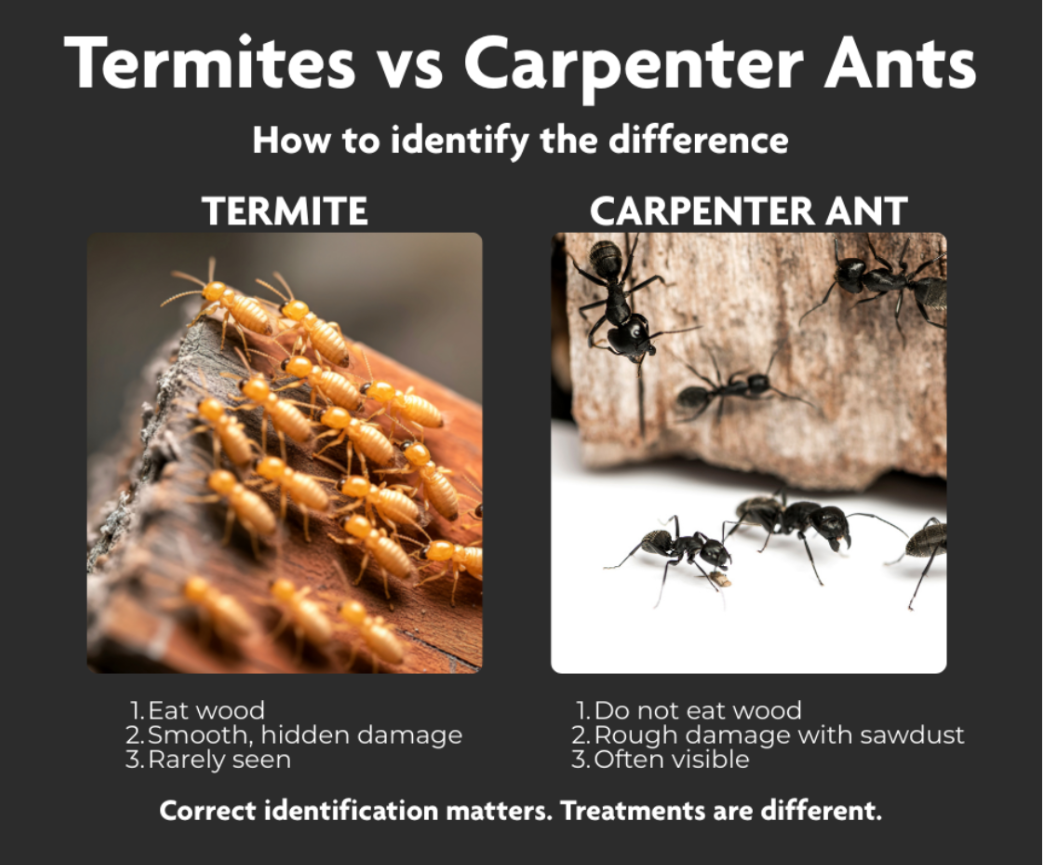
Subterranean termites are statistically far more destructive because they actively utilize wood as a primary food source, feeding continuously twenty-four hours a day. A single mature subterranean colony can quietly hollow out sub-floor joists, main sill plates, and load-bearing stud walls without presenting a single visible surface warning sign. Carpenter ant damage generally advances at a more measured pace and is frequently intercepted much earlier because the large workers actively forage through the open living areas of the house.
The internal texture of the wood damage provides an immediate diagnostic indicator. Subterranean termite tunnels are characteristically rough, gritty, and lined with a caked mixture of soil, saliva, and mud to retain moisture. Carpenter ants, by contrast, maintain exceptionally sanitary nesting habits; they chew out the wood fibers across the grain and meticulously polish the interior walls of their galleries until they are completely clean and smooth, leaving no mud behind.
Furthermore, termites consume wood along the grain, leaving the outer painted veneer layer perfectly intact to shield themselves. Carpenter ants chew through the wood fibers and discard the resulting waste material out of small kick-out holes, leaving diagnostic, localized piles of fine wood shavings, dead insect parts, and insulation debris known as frass directly beneath their nesting entrance.
Diagnostic Structural Comparison Profile
| Physical & Behavioral Signs | Subterranean Termite Activity | Carpenter Ant Infestation |
|---|---|---|
| Internal Gallery Texture | Rough, gritty, and heavily caked with mud soil liners. | Completely clean, sand-smooth, and free of dirt. |
| Accompanying Debris | None; they pack soil inside the wood voids. | Distinctive piles of wood shaving frass. |
| Primary Target Zone | Hidden deep inside foundational sills and flooring grids. | High-moisture framing timbers near leaks or windows. |
| Acoustic Activity | Entirely silent to the unassisted human ear. | Faint rustling or clicking sounds inside drywall voids. |
| Visual Insect Presence | Extraordinarily rare outside of spring swarms. | Highly common; active foraging lines visible daily. |
Are Wood-Destroying Termites and Ants Biologically Related?
No. Termites and carpenter ants belong to entirely different insect orders and share no close evolutionary relationship. DNA tracking confirms that termites are highly specialized, social descendants of ancient cockroach lineages. Carpenter ants belong to the order Hymenoptera, making them direct relatives of bees and stinging wasps. Because their biological structures, feeding drivers, and behaviors are entirely distinct, they require completely separate inspection techniques and custom-tailored chemical treatment strategies.
Do Termites and Ants Engage in Inter-Colony Warfare?
Yes. Ants and termites are historic natural adversaries and will launch highly aggressive territorial attacks against one another whenever their localized nesting perimeters intersect. Predatory ants will actively hunt termite workers for protein; however, the presence of ants on your property provides zero protection against ongoing termite destruction. Both wood-boring species can easily thrive inside the same structure simultaneously, dividing territories across alternative high-moisture foundation sectors.
Recognizing the Critical Warning Signs of Termites
Subterranean termite destruction typically operates entirely masked behind finished surfaces, remaining hidden until structural framing begins to sag. Homeowners must maintain proactive vigilance for these distinct markers:
- Earth-based mud shelter tubes scaling exterior foundation concrete or crawl space piers.
- Slightly blistered or hollow-sounding wood elements along baseboard trim lines.
- Piles of iridescent, detached reproductive swarm wings left on windowsills or near entry doors.
- Finished drywall that suddenly bubbles or sub-floors that begin to warp and sag.
Recognizing the Critical Warning Signs of Carpenter Ants
Because carpenter ant workers must leave the protection of their wall galleries to forage for external proteins and sugars, mapping out an infestation is generally more direct:
- Large, robust black or dark red ants exploring kitchen sinks, pantries, or bathroom fixtures.
- Small, isolated mounds of powdery sawdust frass collecting beneath drywall corners or trim work.
- Dry, crackling rustling sounds emanating from inside insulated wall voids during quiet night hours.
According to entomological research from the North Carolina State Extension, carpenter ants are strongly drawn to soft, water-saturated wood structures. This biological preference means localized moisture faults—like roof leaks or bad flashing—are almost always present near active harborage sites.
Can You Apply the Same Treatment Strategy for Both Pests?
Absolutely not. Termites and carpenter ants require completely different professional treatment methodologies to achieve population suppression. Termite control relies on erecting continuous non-repellent liquid soil barriers around your foundation perimeter or deploying specialized growth-regulator baiting networks to systematically eliminate the underground colony. Conversely, carpenter ant suppression focuses on locating localized satellite harborages inside your wall framing, treating the voids directly, and correcting the underlying moisture liabilities that drew the scouts inside.
Why Early Detection Protects Your Financial Equity
Catching wood-boring activity early completely avoids expensive structural replacement bills. Across North Carolina, our mild winter warming thaws permit both species to remain active behind heated walls for much of the calendar year. Data from the North Carolina State Extension highlights that eastern subterranean termite activity routinely remains undetected until extensive load-bearing support damage has already unfolded. Securing a certified diagnostic inspection exposes these occult threats before infestations can expand into critical load-bearing framing.
When to Arrange an Expert Property Audit
Property owners should contact a certified specialist the moment they discover unexplained wood softening, airborne swarmers, discarded insect wings, or persistent ant foraging paths near structural timbers. Delaying an inspection allows traveling colonies to burrow deeper into your sub-flooring, inflating eventually required contractor labor and material fees. Clear, early identification determines the exact treatment trajectory needed to keep your biggest investment secure.
Frequently Asked Questions (FAQs)
- Are structural ants and subterranean termites closely related? No. Termites are social insects evolved from cockroach lineages, whereas ants are closely related to bees and wasps. Their distinct biologies demand separate, specialized treatment products.
- Can a carpenter ant colony eventually mutate or turn into termites? No. They are entirely separate species. An ant cannot transform into a termite under any environmental conditions.
- Does discovering carpenter ants mean my home is secure from termites? No. While they are natural enemies, they are both drawn to identical high-moisture structural faults and can easily occupy separate wall voids inside the same house.
- How can I identify the type of wood damage if the insects are hidden? Look closely at the tunnel interiors. Termites line their rough galleries with caked mud and soil debris. Carpenter ants leave their hollowed chambers perfectly clean and sand-smooth, accompanied by external piles of sawdust frass.
- Are wood-destroying pests highly active during the winter months? Yes. In our mild regional climate, internal household heating allows both termites and carpenter ants to feed continuously throughout the winter inside crawl spaces and walls, even if you don’t see them on the surface.
Final Property Takeaway
Subterranean termites consume structural wood for food, while carpenter ants hollow out framing timbers exclusively to carve out shelter. Catching these indicators early is your single best defensive tool against expensive framing reconstruction. Harden your home’s defenses year-round with our comprehensive SafeHome Premier protection plan. Contact our local team at Triangle Pest Control today to arrange your comprehensive home audit!