
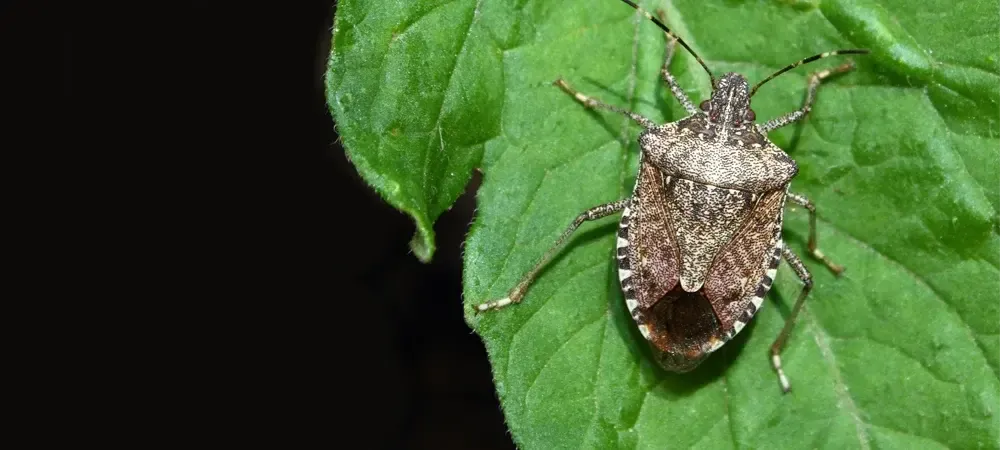
Brown marmorated stink bugs stage massive, high-visibility invasions across North Carolina residential properties every autumn, hunting aggressively for insulated overwintering sites as ambient outdoor temperatures decline below the 60°F threshold. These invasive agricultural pests gather in exceptional numbers around building exteriors before locating tiny structural entry points through unsealed masonry cracks, window gaps, and ventilation openings. This instinctive clustering behavior—driven entirely by a biological need for winter thermal protection—creates intense nuisance problems for homeowners throughout the state from September through November.
What Are Brown Marmorated Stink Bugs?
The brown marmorated stink bug (Halyomorpha halys) is an invasive, shield-shaped insect native to East Asia that was first documented within North Carolina borders in 2009. These robust pests measure approximately 3/4 inch in length and display a distinctively mottled olive-brown to dark-tan coloration, accented by crisp white bands scoring their antennae and outer leg segments. The species earned its common name from the foul, volatile chemical compounds it synthesizes and expels from specialized thoracic glands whenever it is physically compressed, vacuumed, or disturbed.
Unlike native shield bugs, the brown marmorated variant completely lacks effective natural biological predators within the United States, allowing local populations to undergo massive, unchecked reproductive expansions. Research managed by North Carolina State University’s Department of Entomology indicates that this invasive species has successfully established a permanent breeding footprint across all 100 counties within the state, displaying its highest density patterns throughout the Piedmont and mountain foothills where industrial agriculture provides a continuous food supply.
This insect introduces a dual threat vector: it operates as a destructive agricultural pest that damages commercial crops during the summer, and transforms into a persistent residential invader as the seasons turn. Their exceptionally broad feeding profile encompasses more than 100 host plant species, causing severe financial damage across North Carolina’s vital soybean fields, corn fields, commercial tomato tracts, and fruit orchards.
Primary Challenges Driven by Autumn Structural Invasions
Seasonal stink bug introductions generate complex, cascading management issues for local property owners that extend well past simple cosmetic annoyances:
- High-Density Aggregation and Swarming: These insects utilize specialized chemical aggregation signals where initial scouts locate an ideal thermal wall and release airborne markers that draw hundreds or thousands of traveling bugs to the exact same structure. This clustering instinct means that homes selected by early scouts rapidly become targets for massive flying swarms, turning exterior siding into a moving wall of insects within days.
- Pungent defensive Secretions: When threatened or crushed, stink bugs emit a dense cloud of defensive trans-2-octenal and trans-2-decenal aldehydes. These aromatic compounds produce an intensely unpleasant, chemical odor that closely mimics a mix of rotting cilantro, heavy spice, and skunk spray. This secretion can quickly ruin indoor air envelopes, contaminate window fabrics, and linger on household surfaces for weeks.
- Internal Material Contamination: Heavy indoor introductions result in extensive tracking residues, insect fecal spots, and piles of dead carcass debris accumulating inside light fixtures, behind wall decorations, and deep within structural wall voids. These hidden collections present ongoing cleanup demands that persist all winter long as home heating systems pull hidden insects back out of dormancy.
- The Secondary Dermestid Beetle Wave: Accumulations of dead, uncollected insects trapped inside attics or wall cavities serve as a primary high-protein food resource that draws in destructive secondary scavenging pests. Over the winter, carpet beetles, larder beetles, and silverfish will migrate into the home to feed on the dead stink bugs, initializing secondary infestations that are complex to suppress.
Understanding Shifting Entry and Clustering Vectors
To execute proper perimeter protection, homeowners must analyze the two primary environmental triggers that direct these agricultural insects straight toward your siding:
1. Barometric and Temperature-Driven Flight Triggers
Marmorated stink bugs initiate their search for overwintering shelter the moment autumn evening drops consistently push down below 60°F. Across North Carolina, this biological migration window typically opens around mid-September and tracks through late October, making it vital to establish exterior chemical and physical barriers before the initial flight waves exit local fields.
2. Structural Thermotaxis and Solar Attraction
These insects rely heavily on solar heat absorption to guide their tracking flight. During crisp autumn afternoons, swarms actively target homes that display prominent, multi-story south-and-west-facing facades—particularly light-colored vinyl siding, dark masonry brick, and large reflective windows that hold the day’s warmth. While this heat draw makes it easy to predict exactly where bugs will cluster, it introduces frustrating challenges for properties utilizing exterior security lights or large glass window layouts.
How to Systematically Harden Your Exterior Perimeter
Achieving durable, long-term protection against fall swarms demands transitioning away from casual retail fixes and deploying a synchronized, multi-step exclusion system before regional harvest weeks pick up speed:
Step 1: Execute a Complete Exterior Structural Audit
Perform an exhaustive perimeter inspection across your entire home envelope. Pay close attention to weathered window casings, utility line penetrations, crawl space vents, attic soffit joints, and gaps where separate building materials meet, locating potential access tracks before insects begin gathering on your exterior surfaces.
Step 2: Deploy Precision Micro-Encapsulated Barriers
Apply targeted, commercial-grade residual treatments to your home’s exterior structure, heavily treating known congregation spaces, window frameworks, and rooflines. These specialized formulas establish a long-lasting, weather-resistant barrier zone that lowers insect counts before they can gain access to internal wall voids.
Step 3: Establish Continuous Seasonal Tracking
Sustain close observation through the peak harvest weeks of autumn to evaluate barrier effectiveness and quickly capture any secondary migratory waves driven by nearby crop clearing. Documenting localized flight paths and weather conditions ensures your protective treatments remain perfectly adapted to changing outdoor pressure levels.
North Carolina Regional Pressure Vectors and Agricultural Triggers
Our state’s diverse topographical zones and distinct regional farming practices create highly unique pest pressures that demand expert calibration to successfully manage:
- The Agricultural Harvest Displacement Drop: Residential properties situated adjacent to active soybean fields, corn crops, or commercial fruit orchards experience intense swarming pressures. The moment farmers initiate late-summer harvest operations, thousands of feeding insects are instantly displaced from their food sources, sending them into immediate flight toward nearby residential rooflines.
- Western Mountain Thermal Refugia: Across high-elevation zones in western North Carolina, sudden early-season drops force populations out of the cooling mountain canopies. Insects rapidly descend into warmer valley floors and sunny residential microclimates, executing prolonged, intense clustering runs along protected mountain properties.
- The Piedmont Urban-Rural Corridor Crisis: Central North Carolina’s unique blend of expanding suburban development bordering active farmland creates the absolute ultimate incubator environment for population growth. The region’s moderate climate extends the insect’s active season, while abundant suburban ornamental plantings support high-density overwintering populations.
Common Homeowner Management Mistakes to Avoid
The Vacuum and Compression Trap: The single most frequent mistake made by property owners is aggressively swatting, crushing, or vacuuming live stink bugs inside living zones. Squeezing the insect triggers an immediate survival reflex, causing it to release its full volume of offensive defensive aldehydes. Furthermore, vacuuming live bugs coats the interior of your vacuum hose and collection chamber with pungent, non-volatile chemical oils, causing your equipment to exhaust a foul odor every single time it is turned on. Stink bugs found inside should be gently swept into a jar containing soapy water to neutralize them without triggering an odor release.
Delayed Treatment Intervention: Homeowners routinely wait until thousands of bugs are actively coating their windows before attempting to source assistance. By this stage, early scouts have already successfully navigated deep inside attic floor spaces and window frames, rendering exterior barriers far less effective. Perimeter shielding must be deployed during late summer before the migration instinct triggers flight.
Relying on Temporary Consumer Caulks: Attempting to seal complex construction lines using standard, low-grade hardware store caulks or unreinforced foam strips frequently fails under intense insect pressure. Marmorated stink bugs possess flat, thin bodies that allow them to slide through gaps as narrow as a common coin, demanding professional-grade elastomeric compounds and heavy-duty wire mesh screens to achieve dependable structural exclusion.
Frequently Asked Questions (FAQs)
When do brown marmorated stink bugs typically begin targeting North Carolina homes?
The primary structural migration window opens the moment late-summer night temperatures drop below 60°F, typically starting in mid-September, peaking throughout October, and tapering off by November as frost lines settle across the state.
Can an unmanaged stink bug introduction cause structural damage to my home framing?
No. Stink bugs possess zero wood-boring or fabric-chewing mouthparts and will not degrade your home’s load-bearing timbers or electrical lines. Their risk footprint is entirely centered on material contamination, severe air quality degradation, staining, and the attraction of secondary scavenging pests.
Why do these insects return to swarm the exact same properties year after year?
This repetitive nesting behavior is driven by architectural geometry and structural heat retention. Properties that feature prominent, multi-story, south-and-west-facing facades absorb maximum afternoon solar heat during autumn drops, making them a consistent thermal target for migrating flights across the neighborhood.
Secure Your Home’s Boundaries with Triangle Pest Control
Successfully managing an aggressive, invasive seasonal swarm demands an expert understanding of insect biology, accurate local harvest timing, and advanced exterior exclusion strategies. Relying on short-lived retail spray cans or reactive indoor vacuuming will fail to protect your home from recurring infestations, leaving your living spaces vulnerable to lingering foul odors and material staining as the seasons shift.
At Triangle Pest Control, our QualityPro certified field experts possess the specialized environmental training and commercial-grade technologies required to deploy effective, long-lasting pest treatment solutions. We perform exhaustive structural audits to map hidden entry pathways, implement targeted non-repellent micro-encapsulated barriers around your exterior foundation lines, and isolate source populations to keep your indoor spaces completely comfortable. Reclaim full peace of mind this autumn—visit our team at Triangle Pest Control today to arrange your comprehensive property evaluation and reinforce your perimeter shields!