
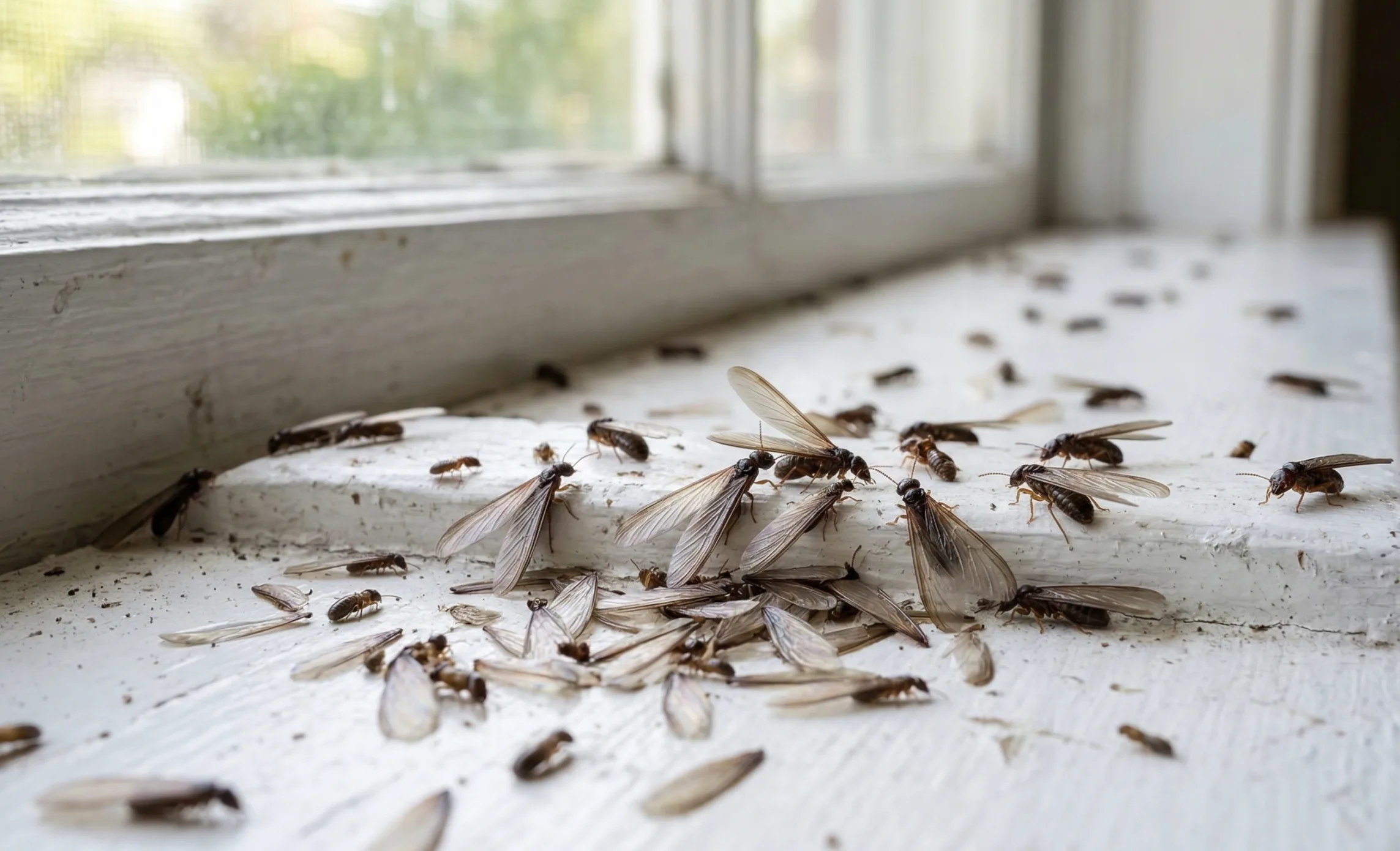
Termites swarm in Raleigh, NC primarily from March through May, with peak activity in April after warm spring rains. The Eastern Subterranean Termite (Reticulitermes flavipes) swarms when soil temperatures rise above 65°F and humidity increases. Swarming usually occurs mid-morning on warm, calm days.
Why Raleigh’s Climate Triggers Termite Swarms
Raleigh’s climate creates ideal swarming conditions each spring.
Wake County has clay-dominant soils that retain moisture near foundations. After several warm days combined with spring rainfall, soil temperatures rise quickly. This signals mature termite colonies that it is time to reproduce.
Eastern Subterranean Termites (Reticulitermes flavipes) live underground. When environmental conditions align, reproductive termites leave the colony to start new nests.
Local Environmental Drivers in Raleigh
- Clay-heavy soils that hold moisture
- Mild winters that allow colonies to remain active
- Rapid temperature swings in early spring
- High humidity after seasonal rain events
According to NC State Extension, termite swarming in North Carolina occurs in spring when environmental conditions such as warming temperatures and increased moisture signal mature colonies to reproduce.
What Time of Day Do Termites Swarm in Raleigh?
Termites in Raleigh usually swarm between late morning and early afternoon.
Swarming most often occurs after a warm rain when temperatures exceed 70°F and wind is low. Calm air allows swarmers to fly short distances and land near new moisture sources.
Homeowners commonly notice:
- Flying insects near windows
- Piles of discarded wings
- Activity around doors or light sources
Swarming inside the home can indicate an active colony in or under the structure. If you’re unsure what to look for, review the common signs of termites in Raleigh homes to identify early warning signals before structural damage occurs.
How Long Does Termite Swarm Season Last in Raleigh?
Termite swarm season in Raleigh typically lasts 6 to 8 weeks.
Most activity occurs from mid-March through late April, but weather patterns can extend swarming into early May. A cooler spring delays activity. A warm, wet March accelerates it.
Even if you miss the swarm, colonies remain active year-round underground.
Are Termite Swarmers Dangerous?
Termite swarmers are not dangerous to people, but they signal potential structural risk.
Swarmers do not bite or sting. Their purpose is reproduction. However, their presence means a mature colony is nearby.
In Raleigh homes with crawl spaces, slab foundations, or untreated wood contact, subterranean termites can cause hidden structural damage before visible signs appear.
Termite Swarmers vs Flying Ants: How Do You Tell the Difference?
Many Raleigh homeowners mistake flying ants for termites. The differences are clear when you know what to look for.
Comparison Matrix
| Feature | Termite Swarmer | Flying Ant |
| Scientific Name | Reticulitermes flavipes | Various ant species |
| Waist | Thick and straight | Pinched and narrow |
| Wings | Two pairs equal in length | Back wings shorter |
| Antennae | Straight | Elbowed |
| Behavior | Shed wings quickly | Keep wings longer |
If you see equal-length wings and a thick waist, it is likely a termite.
What Should You Do If You See Termites Swarming?
If termites swarm inside your Raleigh home, schedule a professional inspection immediately.
Do not spray over-the-counter products and assume the problem is solved. Swarming is only the visible reproductive stage. The main colony remains underground.
A licensed inspection will determine:
- Whether activity is inside or outside
- If structural wood has been compromised
- Whether a baiting or liquid barrier program is needed
At Triangle Pest Control, our termite inspections are thorough, documented, and tailored to Raleigh’s soil and moisture conditions.
Why Raleigh Homes Are Especially Vulnerable
Raleigh homes face higher termite pressure due to:
- Expanding suburban development disturbing soil
- Wood mulch and landscaping near foundations
- Crawl spaces with moisture retention
- Older neighborhoods with untreated wood framing
Neighborhoods like North Hills, Brier Creek, Five Points, and Wakefield commonly report spring swarm activity due to dense residential construction and clay soil composition.
Professional Protection vs Waiting
| Factor | Waiting Until Swarm | Proactive Termite Plan |
| Detection Timing | After colony matures | Early detection |
| Structural Risk | Higher | Minimized |
| Cost Over Time | Potentially major repair | Predictable annual protection |
| Peace of Mind | Uncertain | Ongoing monitoring |
Proactive protection prevents structural damage before it begins.
FAQ Section
- Do termites swarm every year in Raleigh? Yes. Established termite colonies swarm annually in spring once environmental conditions are favorable.
- Does a termite swarm mean my house is infested? Not always, but swarming indoors strongly suggests an active colony in or under the structure.
- Can termites swarm in winter in Raleigh? It is rare. Subterranean termites in Raleigh primarily swarm in spring when soil temperatures exceed 65°F.
- Should I worry if I see wings but no termites? Yes. Discarded wings often indicate swarmers entered and shed their wings, which can signal nearby colony activity.
You should not have to guess whether your home is protected.
If you’ve seen swarmers or want peace of mind before spring peaks, schedule a professional termite inspection today.
Call by 3 PM for same-day service in Raleigh. Protect your home year-round with a SafeHome Premier plan!